
Connect with us

Sciences et technologie

TUNIROBOTS16: Le lancement

Avatar

Published

on

[simplicity-save-for-later]

La journée Nationale de la Robotique, qui rassemble les médias et les étudiants des

différents Instituts, et qui s’intéresse aux domaines technologiques et innovants, a été

publiquement annoncée ce samedi 21 Novembre 2015. Le lancement de  » TUNIROBOTS

16  » a eu lieu à la salle de conférences 2B6-3 à l’Institut National des Sciences Appliquées et

de Technologie à 10h30.

Le mot d’ouverture a été prononcé par le directeur de l’INSAT Mr. Ben Ammar Faouzi. Il a

souligné l’importance de la corrélation entre valeurs humaines et activités technologiques,

chose qui a garanti la réussite des éditions précédentes sur tous les plans.

Au début de la conférence, la présidente de l’événement Mlle Raya Khabthani a déclaré

que la journée aura lieu le 24 Avril 2016.

Avec une bonne humeur et une ambiance chaleureuse, on a diffusé la vidéo récapitulative des

éditions précédentes là où il y avait une alliance parfaite entre les performances artistiques, les

émotions et la technologie immanquablement.

Dans un deuxième lieu, les responsables des axes principaux de la journée se sont présentés

un à un pour clarifier au public les caractéristiques diverses de chaque axe. Le programme

comportera alors:

1. Le concours 2 AFROBOTS: Le thème de cette deuxième édition est un peu spécial:

c’est un thème militaire inspiré de l’actualité qui va réunir l’amusement et l’action. Le

responsable de ce concours a dévoilé le pré-cahier de charge et il a précisé que le

cahier de charge final sera disponible dans le site de l’événement le 1er Décembre

2015.

2. Concours TUNIROBOTS junior: C’est un axe très intéressant de la journée parce qu’il

s’intéresse aux jeunes à partir de l’âge de 7 ans jusqu’à 17 ans. Les participants à ce

concours auront la possibilité d’exploiter leurs connaissances dans un challenge,

concours et des ateliers. Le cahier de charge sera mis en ligne le 2 Décembre.

3. Le challenge 24 heures:  Le cahier de charges sera fourni la veille de l’événement.

4. Des expositions: qui visent à la contribution économique et écologique, ce qui assure

l’intégration sociale dans l’innovation technologique.

5. Le concours 1 à cahier de charges européen Eurobot:  La responsable communication

a affirmé qu’il y a une confirmation préliminaire et toute information concernant cet

affaire sera médiatisée.


Dans la dernière partie de la conférence, on a annoncé que les recrutements des gens

motivés est encore en cours, soit à travers le site de l’événement soit en contactant la

responsable des ressources humaines.

L’inscription dans les différents concours commencera le 5 décembre 2015 jusqu’au 3 janvier

2016.


Siwar BEN HELAL

Share your thoughts

Sciences et technologie

Chapter 2 : England, the Discovery of Vaccines.

insatpress

Published

on

[simplicity-save-for-later]

By

Fast breathing, clenched fists, and hunched shoulders are common signs of tension that most people show as the vaccination syringe approaches the body whilst 300 years ago people took the same syringe with great joy and hope.
The reason is that we are clueless of what humanity endured before the « blessing » of vaccines came to light.
Let me tell you the tale of one of humankind’s greatest inventions through the eyes of a time walker. This invention actually underwent a lengthy process of discovery, development, and improvement that lasted for centuries.

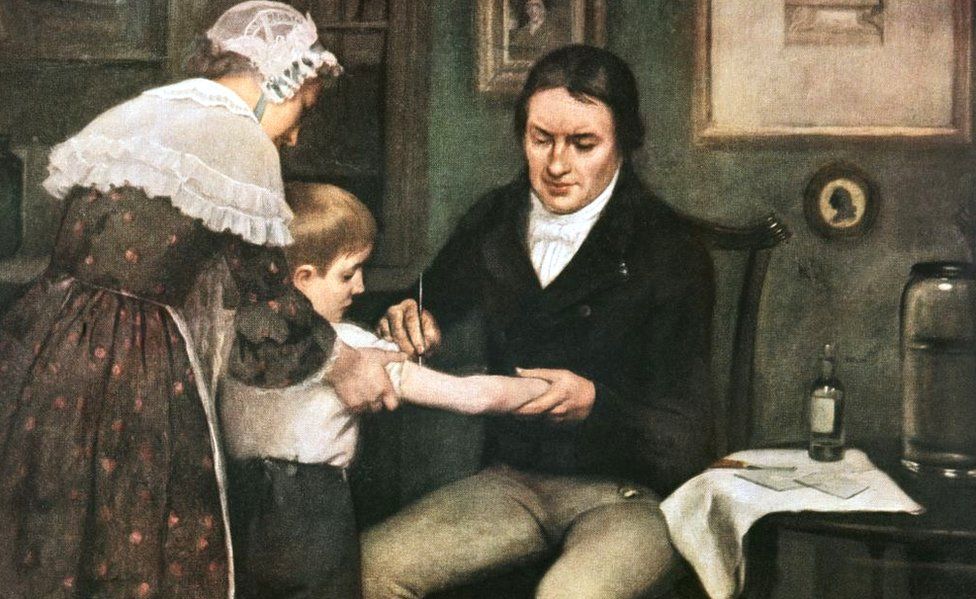
And our wanderer walked down the lane of the 1700s, when English physician Edward Jenner overheard a girl boasting to her friend that she would not contract smallpox because she had already contracted cowpox and she will have a flawless face free from pox blisters.

The doctor thought that the idea was brilliant even though it seemed silly.
Why not provide cowpox vaccination instead of the usual inoculation which involved inserting fresh smallpox material, such as blisters from a sick individual, under the skin of a nonimmune person considering that 3 percent of people died due to variolation using the previous method?
Smallpox and cowpox both belong to the same family « poxviridae » and once the disease is transferred from cows to people, it became weakened
In order to give the immune system the memory it needs to fight smallpox once it enters the body, the doctor came up with the brilliant idea of infecting his patients with cowpox, which is contagious but much less dangerous than what smallpox can do to a human. He called this procedure « the variolae vaccine » and performed it on a boy for the first time. In 1796, at that same time, the idea of a modern vaccination was born. The boy lived and showed no signs of smallpox. And Edward Jenner branded himself as « the father of immunology » in history.
From that time until 1850, vaccination evolved, and then the arm-to-arm vaccination practice emerged, posing a safety concern because this new method of immunization allows for the transmission of bacteria and other diseases from one person to another.
Sydney Cooper, a microbiologist, discovered in 1896 that adding glycerin to the blistering agent used during the procedure could make this vaccination safer.
As a result, scientists were able to create the vaccine « dryvax, » which was used in the 1967 big WHO vaccination campaign that was a complete success.
The smallpox was eradicated, and research continued in the years that followed to reduce the vaccine’s side effects and make it more effective.
With knowledge, observation, try and error as well as the absurd notion of a normal girl, which we can term « luck » and the culminated work of many minds, many hands, many hearts during hundreds of years, this holly tool of science was created.
People like us who were born in an era where a new vaccine could be developed in one or one and a half year to stop a worldwide pandemic are unable to appreciate the blessing that this discovery brought to the world.

One of the deadliest diseases in human history, smallpox is believed to have killed hundreds of millions of people throughout history with a death rate of 30%, compared to coronavirus’s 3%, just to imagine the nightmare it caused to humanity; the battle that humans won against it is one of history’s greatest victories.
Granted with hardiness and protection, waiting for the secret work of a needle in their bodies, with calm breaths and relaxed shoulders people received their vaccine.
May humanity always strive in preserving a world rich of life and vitality.

Written By : Nada Arfaoui.

Share your thoughts

Continue Reading

Made with ❤ at INSAT - Copyrights © 2019, Insat Press